The expansion of AI computing power pushes data center power demand to unprecedented levels. In the first half of 2026, the capacity of internal combustion engines for data center projects under development, including announced, pre-construction and ongoing projects, more than doubled to 45 GW. CITIC Securities also revised upward its forecast for North American AI power demand, with a three-year CAGR of 73% from 2026 to 2028. Slow grid connection progress is driving data centers to adopt on-site self-power generation.
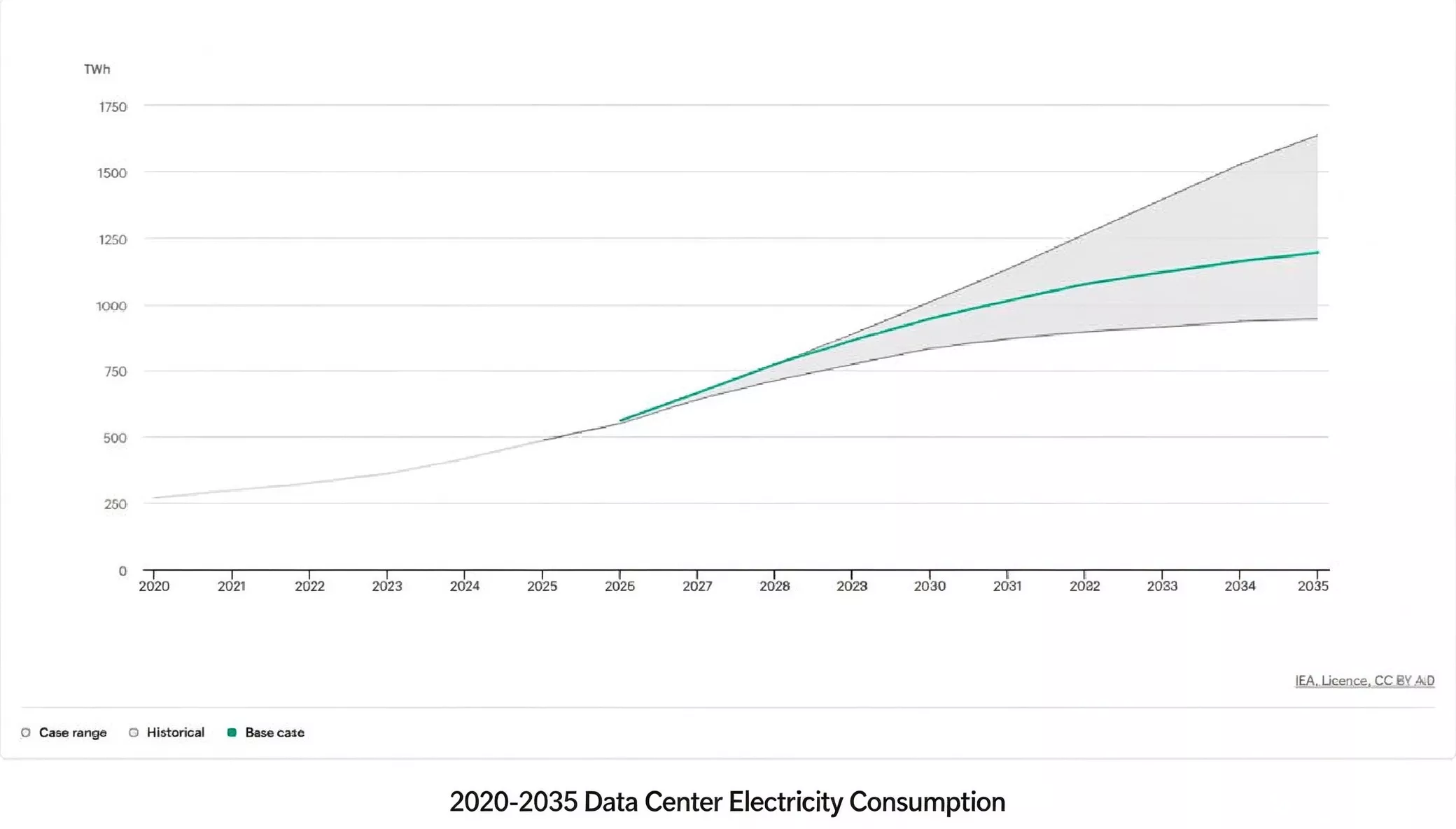
Faced with slow grid expansion and pressure to cut power costs, gas generator sets are shifting from backup power to prime power solutions integrated with waste heat recovery systems for data centers.
Why Data Centers Choose Gas Generator Sets
On-site Stable Power Supply
The power demand of large data centers often outpaces local grid connection and expansion plans. Gas generator sets can be deployed close to loads to deliver stable, adjustable baseload power and reduce reliance on the main grid.
Controllable Power Cost
In regions with sufficient natural gas supply, the power cost of gas units ranges from $0.12 to $0.20 per kWh, delivering predictable economic returns for long-term operation.
Recoverable Waste Heat
Medium-speed gas internal combustion engines reach a thermal efficiency of 50%–52%. Equipped with waste heat recovery systems, over 60% of fuel energy can be recovered for district heating, absorption cooling and other processes, greatly improving overall energy efficiency.
Comparison of Technical Solutions
Gas internal combustion engines offer a wide power range, fast response and on-site maintenance capability. Medium-speed models have a service life of 30–40 years. Gas turbines run at high speeds with rapid component wear and require factory repair, with a service life of roughly 20–25 years. Early data centers preferred gas turbines due to established practices and fuel flexibility. The shift toward internal combustion engines is mainly caused by turbine supply shortages; buyers in the US are even sourcing second-hand gas turbines.
Diesel generator sets are less suitable as prime power solutions amid stricter emission and noise regulations, and are mostly used for emergency backup.
Gas turbines fit ultra-high power applications yet suffer low efficiency under part-load conditions, delivering poorer overall energy performance than medium-speed gas internal combustion engines.
Solid oxide fuel cells (SOFC) operate at around 1000°C with an electrical efficiency of 60% and a service life of 50,000 hours. Their major advantage is short lead time of 12–18 months, much faster than the 5+ years required for large gas turbines. Nevertheless, their per-kWh cost is higher than gas internal combustion engines. Core components need replacement every 50,000 hours at a cost more than twice that of gas engines.
Cost Trade-offs and Supply Lead Time Constraints
Over the full lifecycle, capital expenditure accounts for approximately 20%, while fuel cost dominates total spending. Major overhauls are scheduled at 30,000–60,000 operating hours. The LCOE ranking from low to high is: combined-cycle gas turbines ≈ medium-speed internal combustion engines > simple-cycle light gas turbines > high-speed engines. The variable cost of medium-speed gas units is about CNY 1.2–1.6 per kWh, rising to around CNY 2.5 per kWh including overhaul expenses. Simple-cycle gas turbines cost $0.10–0.15 per kWh, and combined-cycle units can reach $0.05–0.10 per kWh, though they come with higher upfront investment and component replacement costs. Gas turbines hold an edge in LCOE under ideal operating conditions, but medium-speed internal combustion engines better meet current data center requirements thanks to reliable delivery, on-site service and flexible distributed installation.
Conclusion
For AI data centers, gas internal combustion engines stand out not by leading in every single metric, but by combining reliable delivery, on-site maintainability and flexible distributed deployment. A hybrid configuration using medium-speed engines for baseload power, high-speed units for emergency standby and supplementary energy storage meets two critical requirements: fast commissioning and stable long-duration operation.