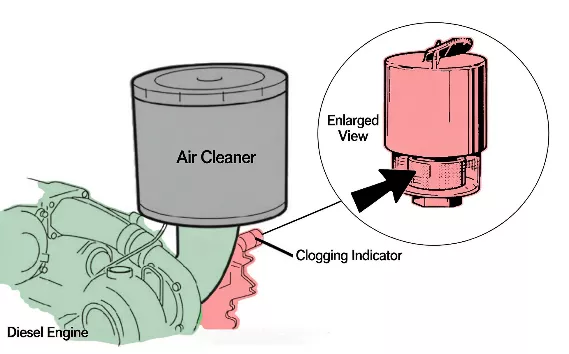
I. Working Principles of the Air Filter
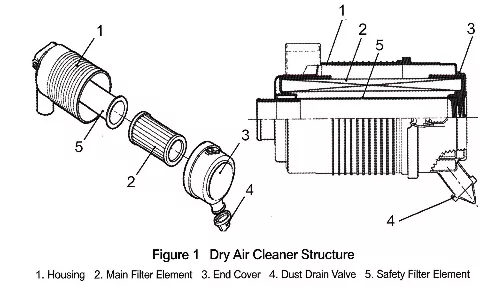
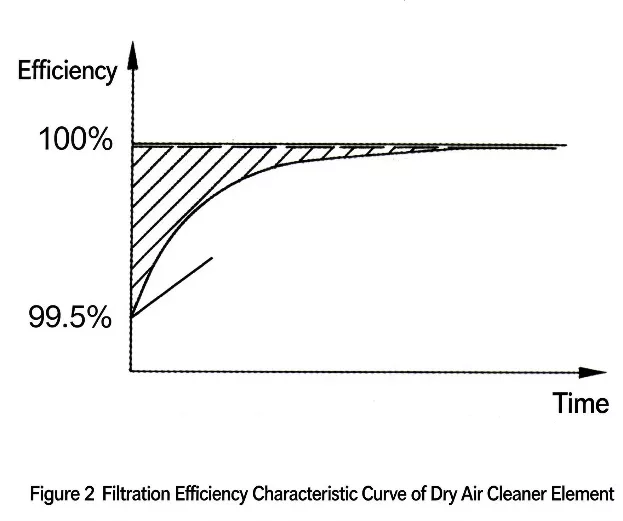
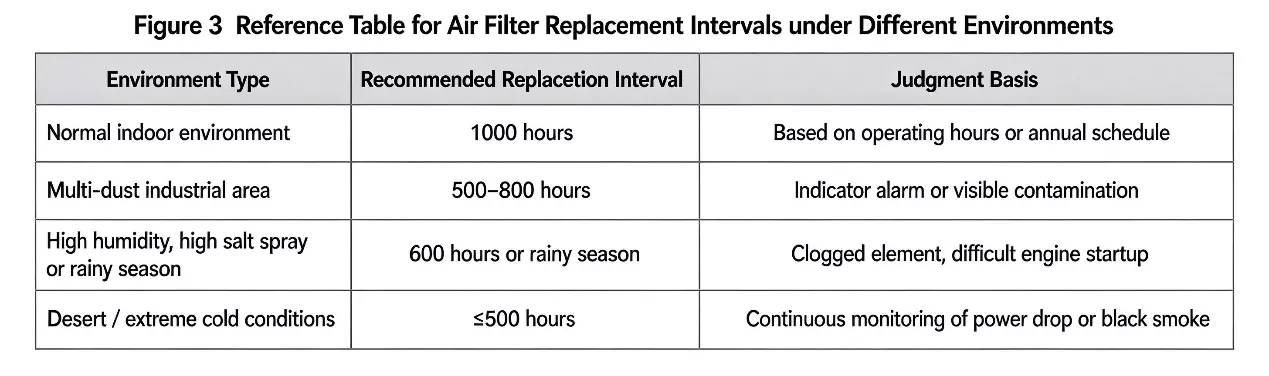
Maintenance intervals must not be fixed uniformly and should be graded by dust concentration in operating environments.
- Daily inspection (every 8–10 hours or before daily startup): Check whether the dust ejector valve is blocked and empty dust from the dust cup. This simple step is often overlooked.
- Periodic cleaning (environment‑dependent):
① Moderate dust conditions such as farm operation: Clean the primary filter every 100–150 hours.
② Heavy dust environments including mines, sandlots and construction sites: Shorten the interval to approximately 50 hours.
③ Some manufacturers recommend inspection every 200 hours for normal zones and every 100 hours for high‑dust zones.
Mandatory replacement: Paper filters shall be replaced every 500 operating hours or 1 year whichever comes first even if they appear intact. Replace the complete filter assembly after four service cycles or one year of use. The safety filter must be replaced once removed and shall not be reused after cleaning.
II. Cleaning Procedures
- Seal and preliminary cleaning: Remove the primary filter and seal both ends with a clean cloth or rubber plug. Brush surface dust gently along the pleats and tap the end face lightly to shake off debris.
- Air purging: Use dry compressed air at 0.2–0.3 MPa or a hand blower and blow from the inner side outward. Never wash with water, diesel or gasoline. Liquid cleaning clogs filter pores, sharply increases intake restriction and may even cause engine runaway if diesel enters cylinders.
- Damage inspection: Check for warped end faces, cracked rubber gaskets and dust on the inner filter surface. Shine a strong flashlight through the filter paper. Replace immediately if light penetration, cracks or delamination at end caps are found.
- Safety filter handling: Do not remove the safety filter while servicing the primary filter, to prevent dust from entering the intake duct. Dust found on the safety filter usually indicates a damaged primary filter. Both filters must be replaced together in this case.
III. Commonly Overlooked Details and Misconceptions
- Dust discharge port inspection: The discharge port shall sit at the lowest point of the filter housing. A damaged, fallen or hardened ejector valve allows unfiltered ambient air to be sucked in under negative pressure. In rainy or humid conditions, damp dust clogs the discharge passage, which requires regular inspection.
- Restriction indicator: Frequent activation of the dashboard air filter warning light or locked red flag signals that the maximum allowable intake restriction has been reached. Service or replace the filter at this point and reset the indicator after replacement.
- Risks of low‑quality filters: Avoid cheap substandard filters. Excessive ingested particles cause premature wear of engine cylinder liner, piston, piston rings and piston pin. For modern electronic diesel engines, contaminated intake also leads to DPF blockage and failure.